


/file/publisher-c1a3f893382d2b2f8a9aa22a654d9c97/2025/07/535846b6fd6b412fa0984b7e9c32afae.jpg)

COMMENT | Remembering Han Suyin
COMMENT | The launch of the book by Florence Kuek, “An Ethical Literary Criticism of Han Suyin’s Autobiography: Braving Irrationality”, provided an opportunity for me to share with the audience an evaluation of Han’s writing and work in Malaya and Singapore, as well as to provide a glimpse of how she has influenced my career.
Since then, I have been corrected about the translation of her work into the Malay language. There is a translation of her classic novel “And The Rain My Drink” by Daud Baharum - “Dan Ayer Hujan Minuman-Ku”.
Below are excerpts from a transcription of my talk. For the fuller transcription, readers can visit here.
It is a book for those interested in history and politics, the development and rise of modern China, through the lens and pen of an extraordinary person, a formidable intellect, a gifted and prolific writer in not only the literary world but also an underrated global personality.
COMMENT | The launch of the book by Florence Kuek, “An Ethical Literary Criticism of Han Suyin’s Autobiography: Braving Irrationality”, provided an opportunity for me to share with the audience an evaluation of Han’s writing and work in Malaya and Singapore, as well as to provide a glimpse of how she has influenced my career.
Since then, I have been corrected about the translation of her work into the Malay language. There is a translation of her classic novel “And The Rain My Drink” by Daud Baharum - “Dan Ayer Hujan Minuman-Ku”.
Below are excerpts from a transcription of my talk. For the fuller transcription, readers can visit here.
It is a book for those interested in history and politics, the development and rise of modern China, through the lens and pen of an extraordinary person, a formidable intellect, a gifted and prolific writer in not only the literary world but also an underrated global personality.
To my mind, Han was a giant who crossed, challenged, and overcame racial, gender, cultural, political, and ideological barriers not just in literature but also in her life.
Many notable, famous, and acclaimed writers who have won prizes in literature, even the Nobel Prize winners, lived a different life from what they wrote about.
She, together with luminaries such as George Orwell and Leo Tolstoy, was definitely deserving of the Nobel prize for literature, but was left out for political, ideological and in her case, racial reasons.
She was:
Independent and resilient - no bootlicking.
Intellectually curious and articulate. Always challenging the status quo.
Passionate and emphatic - no pussyfooting.
Bold and daring.
Open to experiences, characterised by existential living, trusting her instincts and values, and being creative.
For the book, Kuek made the right decision by focusing on the six-volume autobiographical work for her dissertation and the book.

The introductory chapter is exemplary in weaving the personal narrative of Han’s early and later life, the unprecedented changes taking place within Chinese society and the impact on China by Western powers and Japan, all intent in carving out pieces of China.
This attempt to bring down and divide China continues today and testifies to the relevance of her writing for the present and younger generation.
My subsequent encounter with Han was through her husband, Leon Comber, in 2011.
This was following the controversy triggered by Mohamad Sabu’s speech, in which the then PAS leader allegedly posited the Malayan Communist Party (MCP) as the real heroes for fighting against the British and for leading the country’s struggle for independence.
This led to an extended debate on the MCP in which other academics joined in.
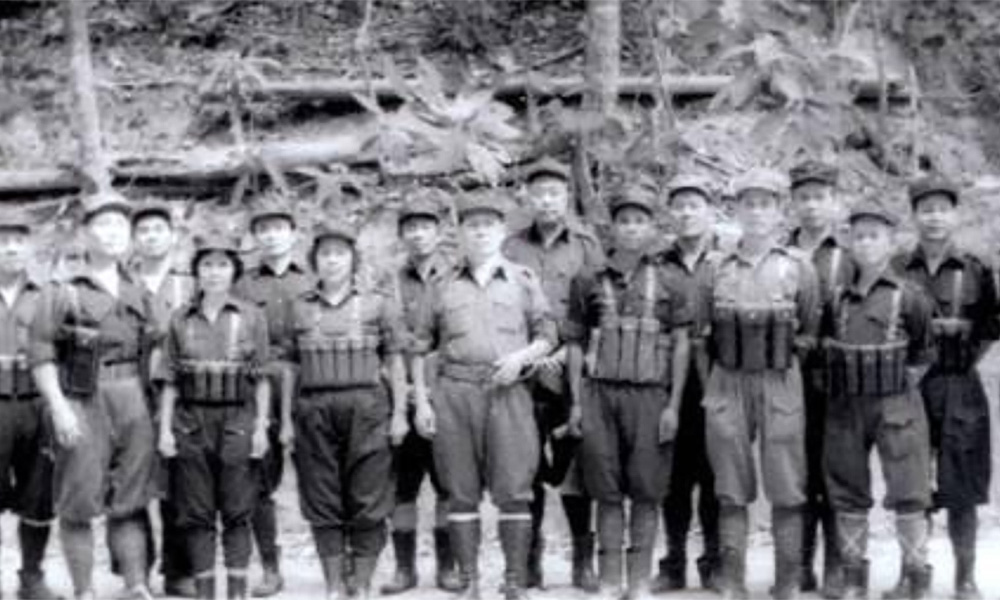
I wrote a commentary titled “Media Lynching and Academic Collaborators”, which resulted from communication with some of the main analysts and professional historians.
This included Comber’s writing on the subject, which had been omitted in Mohamad’s critics’ comments, which were given extensive coverage by the media and politicians at that time.
Han married Comber when he was holding the position of assistant superintendent of police in the special branch, and the story is that he lost his job after the book “And The Rain My Drink” was published.
How Han influenced my work
Han’s work bridges economic data and lived experience, offering these perspectives and approaches:
The material consequences of macro-policies on households of peasant communities in my postgraduate research.
The corrosive role of foreign and local national parasitic or crony capital in state fragility and exploitation.
The importance of deconstructing and challenging Western narratives.
In terms of history, this combination of micro-macro and long approach is the most appropriate tool for analysing and understanding many of the past and contemporary, and likely future developments.
Such an approach is also useful in the humanities and social sciences, including in economics, politics, culture and societal changes.
Han wrote four books while in Malaya and Singapore, of which her 1956 novel “And the Rain My Drink” was the most acclaimed.
It has been described as a pivotal work in postcolonial literature in our part of the world, offering a nuanced critique of British colonialism during the Malayan Emergency (1948–1960).
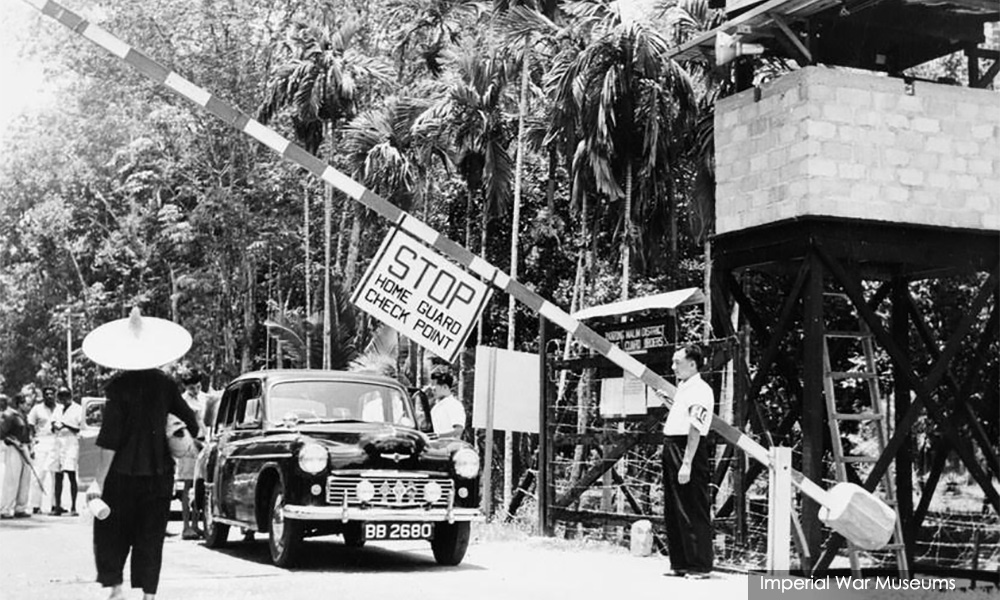
Its significance has been said to span political, historical, cultural, and literary domains.
A critic wrote this
“And the Rain My Drink” remains significant for humanising the Malayan Emergency’s victims and dissecting colonialism’s moral ambiguities.
Its blend of testimony, fiction, and lyrical activism cemented Han’s status as a critical Asian intellectual, while its republication affirms enduring relevance.
The novel is essential for understanding Southeast Asia’s anticolonial struggles and the power of literature to challenge the empire in several ways.
My conclusion and strong concern is that our country has not treated Han well.
If she and her work have been underrated abroad, she has been treated worse and marginalised more in the official history and narratives of our country.
This is because, to me, she was probably the most prominent and outspoken anti-colonial, leftist intellectual and personality of her time in modern Malaya.
She and her writings are deserving of a more respected place in Malaysia.
LIM TECK GHEE is an economic historian, analyst, and former senior official with the United Nations and World Bank.
The views expressed here are those of the author/contributor and do not necessarily represent the views of Malaysiakini.
/file/publisher-c1a3f893382d2b2f8a9aa22a654d9c97/2025/07/d627a690c6e3562181f2b0404dc0deca.jpg)
/file/publisher-c1a3f893382d2b2f8a9aa22a654d9c97/2025/06/26fc356d984f03bebd64efee619f2366.jpg)
/file/publisher-c1a3f893382d2b2f8a9aa22a654d9c97/2024/03/898a03f950660f668e2477297b33a813.jpg)
/file/publisher-c1a3f893382d2b2f8a9aa22a654d9c97/2022/07/18526c0ccd3cd64ba5350d27ed29d928.jpg)
/file/publisher-c1a3f893382d2b2f8a9aa22a654d9c97/2023/06/fd48b7886e2d266b160d17b6dedf65fd.jpg)


Report this comment
Are you sure you want to delete this comment?
This action cannot be undone.